Tackling Early Patient Drop-Out

Early drop-out rates
Across therapeutic areas and study phases, early drop-out rates consistently range between 25–30%.
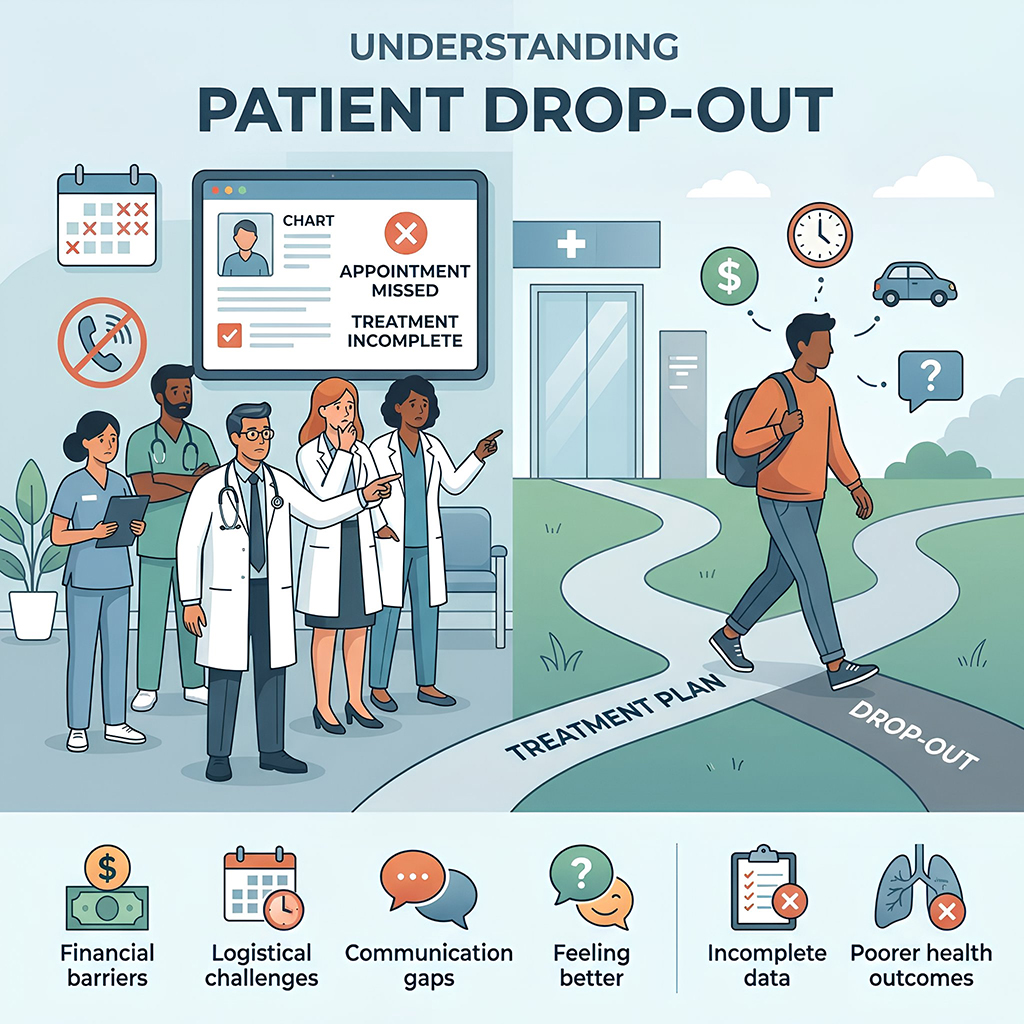
Drop-out is not random. It is rarely sudden. It is usually the result of evolving behavioral and experiential pressures that remain unmanaged.
When a participant withdraws early, the consequences extend beyond a single data point.
Drop-out impacts:
- Statistical power
- Data completeness
- Study timelines
- Replacement recruitment costs
- Regulatory confidence
Retention is not simply an operational metric. It is foundational to trial integrity.
Reducing drop-out is not simply about improving communication. It requires early detection and targeted intervention.
Why Patients Withdraw
Patients rarely leave a trial for a single reason.
Common drivers include:
- Perceived treatment burden
- Side effects or symptom fluctuations
- Emotional uncertainty about benefit
- Logistical challenges
- Reduced perceived control
These factors evolve over time.
Without structured monitoring, they remain invisible until withdrawal occurs.
By the time drop-out becomes visible, it is too late to intervene.

From Reaction to Prevention
Most trial teams manage drop-out reactively.
True progress requires early detection of adherence risk before it escalates into withdrawal.
Reducing early drop-out requires:
- Continuous risk visibility
- Behavioral insight
- Timely intervention
- Structured adherence governance
Retention improves when adherence risk is treated as a measurable variable not a passive outcome.